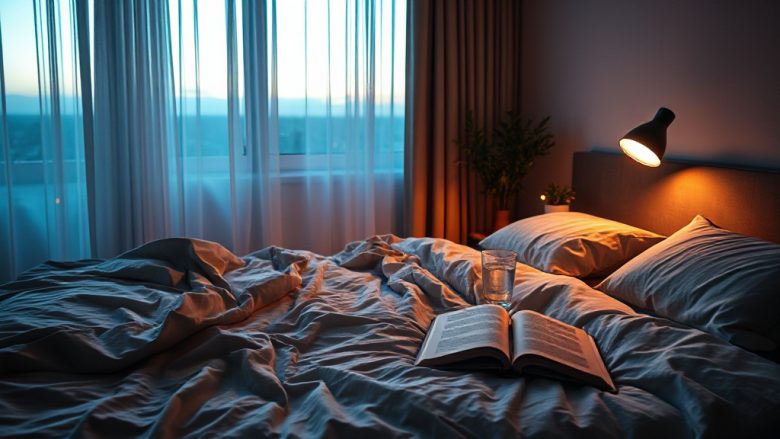
Sleep is not a switch you flip when your head hits the pillow. It behaves more like a tide. Two internal systems pull it in and push it out across the day, and most natural ways to improve sleep quality work by supporting those systems rather than forcing yourself to drift off.
The first system is sleep pressure. From the moment you wake, a chemical called adenosine builds up in the brain. The longer you are awake, the more it accumulates, and the sleepier you feel. Caffeine works by blocking adenosine receptors, which is why a late afternoon coffee can flatten the tide hours later.
The second system is your circadian rhythm, a roughly 24-hour internal clock that decides when sleep pressure translates into actual sleep. It is set mainly by light hitting the eyes, plus timing cues like meals and activity. When these two systems line up, sleep arrives easily. When they drift apart, you get that tired-but-wired feeling at midnight.
Almost everything below is a way of nudging one or both of these systems back into alignment. None of it is dramatic. Most of it is free.
Get Morning Light Within an Hour of Waking
If you only change one thing, make it this. Bright light in the morning is the strongest signal your circadian clock receives. It tells the brain that the biological day has started, which sets a timer for when melatonin, the hormone that promotes sleep, will begin rising that evening.
Ordinary indoor lighting is far too weak to do this properly. A well-lit kitchen might measure a few hundred lux; an overcast morning outside can be several thousand, and direct sun far more. Even ten to twenty minutes outdoors shortly after waking, without sunglasses, makes a measurable difference. Cloud cover still works. Rain still works. Sitting by a window does not, because glass filters much of the relevant light.
There is a useful side effect. Morning light also lifts alertness and mood in the first part of the day, which makes it easier to stay active and build up healthy sleep pressure by evening. If you cannot get outside, a light therapy lamp of around 10,000 lux used for twenty to thirty minutes at breakfast is a reasonable substitute, though natural daylight remains the better option.
Consistency matters more than intensity here. Getting light at roughly the same time each morning anchors the whole rhythm. Sleeping in by three hours on a weekend is enough to shift your clock and make Monday morning feel like jet lag.
Dim the Evening and Rethink Screens
If morning light starts the clock, evening light delays it. Bright light after sunset, particularly blue-rich light from screens and overhead fixtures, suppresses melatonin and pushes your internal night later. You end up lying awake at a normal bedtime because your body still thinks it is early evening.
The practical fix is not to ban screens entirely. It is to reduce the intensity and duration of light in the two hours before bed. Lower your lamps, use warm-toned bulbs, and avoid bright overhead lighting in the room where you relax. A dimmer switch or a single low lamp changes the atmosphere of a room more than most people expect.
Screens deserve a slightly different treatment. The light matters, but so does what is on them. Scrolling news, arguments in group chats, or a tense episode of a series all raise arousal, and arousal is the enemy of sleep pressure doing its job. If you want to keep using a phone or laptop in the evening, reduce brightness, enable a warm night mode, and choose content that is calm rather than stimulating.
A simple rule works well: the last hour before bed should be the dimmest and quietest hour of your day. That single principle covers most of what evening light management is trying to achieve.
Cool the Room and Control the Noise
Core body temperature has to drop slightly for sleep to begin. This is not a metaphor; it is part of the mechanism. A bedroom that is too warm keeps that drop from happening, and you end up restless and sweaty rather than drowsy.
Most adults sleep best in a room around 16 to 19 degrees Celsius, though personal preference varies. If you cannot control the thermostat, you can still help the process. A warm shower or bath an hour or two before bed causes blood vessels near the skin to dilate, releasing heat and accelerating the natural cooling that follows. The effect is real and well documented, and it works even if the bath itself feels warm.
Bedding matters too. Breathable natural fibres, layered rather than a single heavy duvet, let you adjust through the night. Feet sticking out from under the covers is not a quirk; it is an efficient way to lose heat.
Noise is the other half of the bedroom environment. Sudden sounds fragment sleep even when they do not fully wake you, which is why you can sleep eight hours and still feel unrefreshed. Steady background noise is less disruptive than intermittent noise, which is why a fan, an air purifier, or a white noise machine often helps. Earplugs are cheap and effective if a partner snores or traffic starts early. If noise is unavoidable, masking it with something continuous beats trying to ignore it.
Build a Consistent Wind-Down Sequence
The body learns patterns. A repeatable sequence in the last thirty to sixty minutes before bed becomes a cue that sleep is coming, in the same way that a specific route to the gym can make you ready to train. The content of the sequence matters less than its consistency.
A useful wind-down tends to include a few quiet, low-stakes activities done in the same order most nights. Reading paper books, gentle stretching, tidying the kitchen, writing tomorrow’s to-do list, or listening to something calm all fit. The common thread is that none of them demand much from your attention or your emotions.
Timing is part of the sequence too. Going to bed and waking at roughly the same times every day, including weekends, is the single most reliable way to keep your circadian rhythm steady. Your body cannot distinguish a Tuesday bedtime from a Saturday one; it only notices the pattern.
There is one thing worth avoiding: lying in bed awake and frustrated. If you have been awake for more than about twenty minutes, get up, keep the lights low, and do something boring until you feel sleepy again. Staying in bed while anxious teaches your brain to associate the bed with wakefulness, which is the opposite of what you want.
Caffeine and alcohol both interact with sleep pressure in ways people underestimate. Caffeine has a half-life of around five to six hours, so an afternoon coffee is still active at bedtime. Alcohol can help you fall asleep faster, but it fragments sleep in the second half of the night and suppresses the deeper stages. Cutting caffeine after early afternoon and keeping alcohol modest in the evening often improves sleep more than any gadget.
When to See a Doctor About Your Sleep
Most sleep problems respond to the adjustments above within a few weeks. Some do not, and it is worth knowing where the line is.
Talk to a doctor if you snore heavily and wake unrefreshed, if you gasp or stop breathing during sleep, if you feel an overwhelming urge to move your legs at night, or if you fall asleep during the day despite spending enough time in bed. These patterns can point to conditions such as sleep apnoea or restless legs syndrome, which need proper assessment rather than lifestyle tweaks.
Seek help as well if insomnia has lasted more than a few weeks, if it is affecting your mood or work, or if you are relying on alcohol or sleeping aids to get through the night. Persistent insomnia is treatable, and the most effective approach is a structured behavioural programme rather than medication alone. A GP can refer you to the right service.
Natural ways to improve sleep quality are powerful, but they are not a substitute for medical care when something more serious is going on. Knowing the difference is part of looking after your sleep properly.
Frequently Asked Questions
How long does it take for natural sleep changes to work?
Morning light and consistent timing usually shift the circadian rhythm within one to two weeks. Temperature and wind-down adjustments can help from the first few nights. If nothing improves after three to four weeks of steady effort, it is worth speaking to a doctor.
Is it bad to use my phone before bed?
The light and the content both matter. Bright screens delay melatonin, and stimulating content raises arousal. If you keep your phone, dim it, use night mode, and choose calm content. Putting it down an hour before bed is better still.
Do sleep trackers and apps actually help?
They can be useful for spotting patterns, such as how late caffeine or alcohol affects your sleep. But they can also create anxiety about sleep scores, which makes insomnia worse. Use them as a rough guide, not a verdict.
What if I wake up at 3am every night?
Early waking is common and often linked to stress, alcohol, or a circadian rhythm that has drifted. Keeping the room cool and dark, avoiding alcohol in the evening, and getting morning light consistently can help. If it persists, mention it to your doctor.