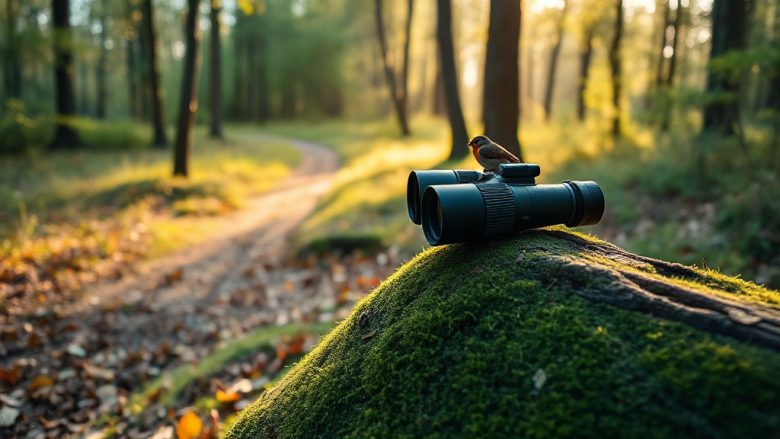
The counterintuitive truth about how to improve your wildlife watching is that the best watchers spend most of their time sitting still and listening, not walking and looking. I learned this the slow way, after years of tramping through woods and coming home with nothing but sore legs and a few blurred photos of a departing deer’s backside. The turning point wasn’t a new lens or a better app. It was admitting that my own noise and movement were the problem. Once I started treating wildlife watching as a practice of stillness rather than a hike with binoculars, everything changed. These five habits are the ones that made the biggest difference for me, and none of them require expensive gear.
1. Sit Still First, Walk Later
Most people arrive at a promising spot and immediately start moving. That’s the mistake. Animals are tuned to motion and sound, and a human shape crunching along a path is about as welcome as a brass band at a library. The fix is simple: pick a comfortable place with a good view, sit down, and stay there for at least twenty minutes before you even think about moving on.
The first ten minutes are usually dead. Birds and mammals that scattered when you arrived are still assessing whether you’re a threat. If you stay put, they gradually relax. I’ve had robins land within a metre of my boot, and a fox trot past a hedge I was leaning against, simply because I’d been motionless long enough to become part of the scenery. Bring a foam mat or a folded jacket. Cold, damp ground will have you fidgeting within five minutes, and fidgeting is the enemy.
When you do move, move in slow, deliberate steps. Pause often. Scan with your eyes before your feet. It feels ridiculous at first, like playing statues, but it works. Think of it as borrowing the pace of a browsing deer rather than the pace of a commuter.
2. Learn the Local Clock
Wildlife runs on a schedule, and it’s rarely the schedule you’d guess. The golden hours around dawn and dusk are famous for a reason, but the details matter. In summer, the first hour after sunrise is often frantic with activity, then things go quiet by mid-morning. In winter, the window shifts later and the middle of the day can be surprisingly good, especially on cold, bright days when small mammals and birds are actively feeding to stay warm.
Spend a few weeks noting what you see and when. Not in a fancy spreadsheet, just a note on your phone. You’ll start to spot patterns. The local pond might be best for dragonflies in the late morning, while the hedgerow behind it is alive with warblers at first light. Tides matter too if you’re near the coast; low tide exposes mudflats that draw waders, and the two hours either side of high tide can push birds closer to shore.
Weather is part of the clock as well. A light drizzle often brings worms to the surface and blackbirds onto the lawn. A cold snap after rain can concentrate birds at feeders. Wind is the quiet killer; a blustery day sends most small creatures into cover, so save those days for planning rather than watching. Learning how to improve your wildlife watching is largely about learning when not to bother.
3. Use Your Peripheral Vision
Here’s something nobody tells you: staring directly at a spot is often the worst way to see what’s there. Human eyes have a narrow band of sharp focus, and movement is picked up best by the outer edges of your vision. Animals know this instinctively. If you lock your gaze on a bird, it feels watched and may freeze or flee. If you look slightly past it, it stays relaxed.
Practise soft focus. Let your eyes rest on a middle distance and let the foreground and background blur. You’ll notice twitches and flickers at the edges of your vision that you’d miss with a hard stare. This is also why scanning a hedgerow slowly, rather than darting from point to point, reveals more. Your brain is brilliant at detecting patterns and motion, but only if you give it a calm, wide view to work with.
Binoculars can help, but they narrow your field dramatically. Use them to confirm what you’ve already spotted with your naked eyes, not as a searchlight. And when you do raise them, move slowly. The classic mistake is to swing binoculars up fast, which is the visual equivalent of slamming a door.
4. Read Tracks, Signs and Calls
You don’t need to see an animal to know it’s there. Tracks, scat, feathers, nibbled twigs and burrows are all clues, and following them is often more rewarding than a fleeting glimpse. A muddy path after rain is a newspaper. Look for the two-toed prints of deer, the five-toed pads of badgers, or the neat little hand-like prints of squirrels. Size and stride tell you whether the animal was walking, trotting or running.
Listen more than you look. Birds are the alarm system of the woods. A sudden burst of alarm calls means something is moving, often a predator. Learn a handful of common calls: the sharp chip of a blackbird, the scolding chatter of a wren, the mewing of a buzzard. You’ll start to hear the landscape as a conversation, and you’ll know when to stop and wait. A quiet, repeated ‘tick’ in the undergrowth might be a robin; a rustle in dry leaves could be a mouse or a hedgehog.
Smell matters too. Foxes have a distinct musky scent, and otters leave a fishy spraint on rocks. These signs tell you where to focus your patience. Instead of wandering, you sit where the evidence says something will pass.
5. Keep a Simple Log
Memory is unreliable. You’ll swear you saw a kingfisher last April, but you won’t remember whether it was before or after the rain, or which stretch of river. A simple log fixes that. I use a small notebook and jot down the date, time, weather, location and what I saw. That’s it. No elaborate system.
After a season, patterns emerge. You’ll notice that the heron always fishes the same pool at low tide, or that the bats appear only when the temperature stays above a certain point. This turns guessing into knowing. It also makes you a better observer because you’re paying attention to details you’d otherwise ignore. Over a year, your log becomes a personal field guide to your patch, far more useful than any generic book.
If you prefer your phone, a notes app works fine. The key is consistency, not format. Even a few lines after each walk will build a picture that transforms how to improve your wildlife watching, because you stop repeating the same empty walks and start returning to places at the right moments.
A Short Note on Ethics
Seeing more wildlife is a privilege, and it comes with a responsibility to leave things as you found them. Stay on paths where they exist, keep your distance, and never chase an animal for a better view. If a bird is alarm-calling or a mammal is staring at you, you’re too close. Back off slowly.
Don’t feed wildlife to lure it closer, and don’t play recordings of calls to draw birds out. Both cause stress and can disrupt feeding or nesting. Take your litter home, including fruit peel and crumbs, which can attract predators and make animals sick. Leave logs and stones where they lie; they’re homes. The best wildlife watchers are the ones who leave no trace and no disturbance, just a quiet gratitude for what they were allowed to see. That’s the habit that makes all the others worthwhile.
Frequently Asked Questions
What is the single best time of day to watch wildlife?
Dawn is usually the most productive, especially in spring and summer, because many animals are active and the light is soft. Dusk is a close second. In winter, the middle of the day can be better because animals are feeding to stay warm.
Do I need expensive binoculars to see more wildlife?
No. Good fieldcraft, patience and a simple pair of binoculars will outperform expensive gear used badly. Learn to use your naked eyes and peripheral vision first, then add optics when you can.
How do I stop scaring animals away?
Move slowly, keep low, and avoid sudden noises. Wear quiet clothing that doesn’t rustle. Sit still for long periods and let animals come to you rather than approaching them. If you see alarm behaviour, retreat quietly.
Is it okay to use bird calls to attract wildlife?
It’s best avoided. Playback can stress birds, disrupt territory defence and pull them away from feeding or nesting. Watching natural behaviour without interference is more rewarding and more ethical.